Paul Jorion & Geneviève Delbos
Is there any such thing as local traditional knowledge?
Paper presented at the April 15, 2005, UNESCO Conference, Safeguarding the Transmission of Local and Indigenous Knowledge of Nature (AichiPrefectureUniversity, Nagoya)
One can speak of “applied knowledge” but not of “applied belief”
When we talk of salvaging local traditional knowledge we have something very specific in mind. First, we’re not saying here “traditional beliefs” but “traditional knowledge” and we’re intentionally using the second term rather than the first. Sometimes we call “belief” what someone else holds to be true and that we don’t; in that case “belief” might just be a polemical label we use for some views we regard to be false and that we could just as well call by anther term, such as “superstition” (Jorion & Delbos 1985; Jorion 1990: 148-150). We may not be so definite though about whether a “belief” is true or false and we may simply tend to call “belief” a type of knowledge the truth of which is not established. This simply means either that a belief is an untested view or that it is based on “faith”, meaning by this that there is no known testing procedure for it and that we’re supposed to hang on to it despite such a lack of justification. With “knowledge” – and we’re leaving for later a proper definition for it – we assume to be on firmer ground.
This doesn’t mean that “beliefs” can’t be implemented, but typically, implemented beliefs are not guaranteed to be effective. Prayer offers a good example of an “applied belief” and a good example of a practice that is not guaranteed to operate: indeed, to work, a prayer relies on someone else’s goodwill which, we know it from experience, automatically entails a risk that it will fail to materialize. “Applied belief” may also depend for its success on a complex combination of preconditions. Evans-Pritchard showed about witchcraft as practiced by the Zande of the Congo, that the beliefs supporting it cannot be easily dismissed as they suppose a complex web of mutually influencing factors and there exist so many admitted reasons why things may not work according to plan that it is close to impossible to pinpoint which of the underlying precepts might be in need of revision (Evans-Pritchard 1937).
This can be translated as to mean also that a “belief” by its very nature hasn’t enough of a practical side to it that a reliable technique to be used in everyday life could be derived from it. Thus it is admissible to talk of “applied chemistry” or of “applied mathematics” but not of “applied beliefs.” Conversely however, I should feel free to talk of “applied local traditional knowledge.”
Thus a provisional conclusion that can immediately be reached: that local traditional knowledge holds some property in common with the individual sciences and mathematics in that it can act as the base for some technical application, unlike local traditional beliefs which are deprived of such power.
Local traditional knowledge fairs poorly in the school environment
But what does that really say?
In the experience we shared in Brittany, and that our book “La transmission des savoirs” (1984) is the account of, with in-shore fishermen, shell-breeders and traditional salt-producers, invited into the class-room to dispense their knowledge, field-practitioners were most often observed to have precious little to say. The disappointed attendees to these sessions would observe about them that “They find it hard to come up with a synthesis” or “They’re good in the field all right but in the lecture room they’re incapable of telling you why you should be doing it in this or in that other way, or for that matter why you should be doing it at all” or again “The issue is putting words on what you’re doing and these people, those words, they just don’t have them”.
So the experience was frustrating of trying to bring local traditional knowledge within the precincts of the school: practitioners didn’t have much to tell and when they had, what they would then say was more often than not blatantly false, making one particular unsympathetic scientist say “Ha, Ha! Didn’t we tell you there was very little of interest to be found here?” (Lemonnier & Héral 1975).
We assume “knowledge”, i.e. a theory, because we see a technique
Within the field context, practitioners do transmit knowledge but under an uncanny guise: they essentially tell the apprentice “Shut up and work!” And asked to justify why working in this particular manner rather than in any other, they say such things as: “That’s the way it is! Do the job and you’ll find out!”
And so, as a matter of fact, that is precisely what then takes place: the apprentice does the job, finds out by trial and error what works and what doesn’t, up until one felicitous day when the master tells him, and then to his utter amazement, that there isn’t anything more to learn and that he now knows all that there is to it. Some time later of course his own turn will come for being asked to explain and sure enough he will then say “Why don’t you work and shut up!”
So one may wonder, where lies the specificity of the local traditional knowledge associated with these techniques if it is not enunciated in order to be transmitted? And the answer is in truth very simple: should it be that local traditional knowledge can’t be expressed, passed with words, if it needs at every generation to be rediscovered through trial and error, what is it that makes it “traditional” and even more essentially, what is it that makes it “knowledge” in the first place?
Local traditional knowledge would turn out to be something that we’ve wrongly assumed grander than it actually is. Why? Precisely because of the existence in other quarters of an “applied chemistry” and of an “applied mathematics”: because we’ve become adept to the notion that a technique is out of necessity the application of some body of knowledge. Most are indeed nowadays, but it used to be (and remains so partially) that technology was essentially empirical: developed through trial and error. We’re so much immersed in the notion that you start by knowing something theoretically and then turn towards the world to implement that theoretical knowledge, to change the world in accordance, that we can’t imagine any longer that you can make something work without knowing precisely why it works that way and in no other possible way.
There’s in fact very little local traditional knowledge because the only thing that exists for sure is the one that can actually be seen: the local traditional technique. The one thing that exists beyond any possible doubt is the technique but there’s hardly any expressible theoretical knowledge lying there in the background attached to it. We infer the existence of a body of articulated knowledge because we observe a technique and a technique that functions and we’re so used assuming behind a technique a body of knowledge that’s being “applied” in the workings of that technique that we assume that there must be one. But what we’re dealing with in fact is a technique without a theory to support it. It can be shown surely how it operates but that’s about it as we’re missing an explanation as of why: what we’re getting instead, in the very best of cases, is but a disparate assembly of comments that practitioners are able to utter about their practice: observations of facts have been collected and these can then be retrieved under the form of comments.
How could that be? Remember about the apprentice who found out the hard way that the only justification for having proceeded in a particular manner is that it could be shown to work. If it didn’t work, he’d “been had” and needed to change his ways. There’s no need here for any such thing as an “explanation”: the outcome only matters. It is the outcome that shows that the manner it was done was the right one: not any explanation that could be generated as a comment of the action, like would be the case for instance at school, or in court. And, after all, why would it be otherwise?
Knowledge in local traditional knowledge is “procedural”
Because in such instances the trial and error that allowed to develop the technique has not allowed any generalization: it’s not been possible to let emerge any universal “principle” that says why it should be this way rather than otherwise. The practitioner could no doubt describe in details what he had done but would fail when the time would come for explaining “why”. The description of what’s happened is specific and can always be generated as it amounts simply to relating what is observed. The explanation by contrast is a manner for transmitting knowledge expressed in general terms, i.e., making it possible to transpose the technique in question to different surroundings or at some other time, or to slightly different circumstances. But this does not apply in the case of the practitioner we’re talking about here who is always dealing with singular configurations. In “La transmission des savoirs,” we reported the case of the salt-producer who instead of taking over – as is usually the case – his own father’s salt-ponds – inherited his father-in-law’s ones and was very much at a loss about how to recycle in that new environment what he regarded as his extensive expertise (Delbos & Jorion 1984: 138-139) . Using the terms used in programming, what is known here is purely “procedural,” it has been collected with the sole purpose in mind of obtaining a result, it is not “declarative” as when we equate “knowledge” with a true representation with words of how the world operates, that we’re able to articulate as an explanation, i.e. a set of statements logically connected (Jorion 1991a). “The term « procedural »”, says a journalist in a programming trade magazine “indicates that you, the programmer, gets to specify in exquisite detail the procedure by which the program achieves its goal. The term is often contrasted with « declarative », where you describe the nature of the data you have to work on and you want it morphed, leaving it to the language system (compiler, interpreter, and/or run-time support) to figure out how best to do it” (Plauger 1999: 18).
Whatever is known in “local traditional knowledge” can be written as a set of instructions, as in a manual, but not as a theory of the process, that is, as a set of propositions in the form of “because… therefore…” What is lacking is the logical articulation between the statements, making the “knowledge” a piece of reasoning, instead of a set of instructions the merit of which is that the procedure as a whole has been shown to “work.” The power of “declarative” knowledge resides in the miracle of the syllogism that, should only the beginning be remembered, the missing part could still be retrieved through reasoning, i.e. through generating a concatenation of syllogisms (see Jorion 2000).
The time has come for science to discover knowledge without a theory
Fifty years ago, our pronouncement here would have been highly contentious. Scientists would have retorted “But this is impossible: there’re always principles to be induced: if a technique works there must exist underlying regularities expressible as a law!” But this was fifty years ago and scientists don’t say anything of the kind any longer. Or at least they shouldn’t say that anymore: not anymore after “chaos theory” has come around and taken the scientific community by storm, where order looks so much like disorder that that’s the best way indeed for dealing with it. “Critical systems” enter a critical state and can from then on bifurcate to an entirely different path any time. In a “discrete dynamical system” its next state is determined by a set of its past states and its behavior depends entirely on its initial conditions while all possible paths fan out wildly after the process’ inception (the Lyapunov coefficient measures such a disposition to diverge exponentially) so that infinitesimally small differences when the process starts lead to widely different outcomes. With those, if the scientist wishes to maintain some element of predictability, he or she is forced to simulate the behavior of the system through the painstaking examination of thousands of runs and derive from there the probability space of what may happen, i.e. resorting to the method that local traditional knowledge has used consistently over the ages, amassing troves of observations in order to produce some effect.
Practitioners abstain wisely from formulating any hypotheses about the processes at work and who could blame them? As we wrote also in “La transmission des savoirs”, about the salt-producer: when comes the evening he walks towards his salt-ponds and stays there for a while, looking around at the color of the sky and the shape of the clouds, at the color of the water also, assessing the quality of the reflection of the light on the water surface, he smells the air and gauges the breeze, puts his finger in the water to taste it (Delbos & Jorion 1984: 142). We quoted one scientist as saying that this evening walk betrays that the salt-producer does not understand the processes at work (ibid. 214). And this is actually true: unlike the scientist who relies on the certainties of what he knows at the theoretical level, the practitioner knows that he doesn’t know, in terms of being able to explain with the help of principles, and that’s precisely why in the evening he feels like walking towards his salt-ponds and marshals every one of the sensors that nature has endowed him with, to have his perceptions make up for his lack of theoretical knowledge.
The practitioner is a catalyst of natural processes
In fact, the practitioner is not the repository of a body of knowledge that he then materializes in order to change the world: the role he is playing is that of a catalyst. He’s located at the junction of a number of natural processes (that metal transitions from solid to fluid at a particular temperature for instance) and he is the means through which those processes are brought together. In Hegel’s words, “He puts himself in the position where nature will wear itself out – on his behalf” (in The Philosophy of the Spirit of the RealPhilosophie). The type of knowledge he will need is what allows him to play that role to perfection. This means also, that being in that central position as the point of transit, the point of leverage of the natural forces, he is in no position to see with any clarity what contribution is properly his own and what responsibility should be assigned instead to the other components of the natural world. In other words, he’s in no position to do what is on the contrary the scientist’s privilege: to “objectify”, i.e. to delineate in a clear-cut manner what part should be assigned to the natural process and what part should be assigned to the human observer. Because in local traditional techniques there’s no observer, just an expert worker at work.
We offer a revealing example, in “La transmission des savoirs,” of what happens when you try to abstract the human agent from one of these technical processes (ibid. 177-180). The example is that of a scientific test that took place around alternative techniques for breeding clams. The scientist wished to remove as much as can do the influence of the field-tester from the overall picture. But the practitioner had his own pride: he wanted to “make it work” at whatever cost: he objected to seeing the experiment fail if he had any notion as to how to make the process succeed through tweaking it appropriately. In the end, when the scientist assessed the results of the experimentation he was forced to report what had actually happened: that the success or failure of the experiment had depended on… the degree of dedication that both the field-testers and the individual scientists had devoted to it!
The worlds seen through theory and through trial and error are different worlds
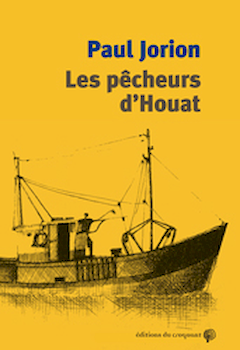
In the same book we discussed the eye-opening case of a difference between fishermen and scientists about how to interpret the natural world. Let us recall the issue briefly. The fishermen of theIslandofHouatin Brittany consider that there are two varieties of lobsters. The first type are black and big, slow-moving, covered with filamentary seaweed and “gravants” white calcareous tubes left by marine worms, they call those “grottiers”, that is “cave-dwellers”; the second type are blue and smaller, fast-paced and shiny, they call them “coureurs”, i.e. runners. Fishermen specialized between these two sorts. Cave-dwellers were captured by sinking individual lobster-pots on small sandy spots surrounded by rock; runners were captured by sinking strings of thirty lobster-pots at a time on large strands of sandy bottom. Both groups of fishermen were doing good business. Now scientists claimed that the notion of two local varieties of lobsters was nonsense. In the book, we worked at coming up with an explanation that would please both sides in the debate (ibid. 181-184). We drew a parallel with the behavior of salmon in the fresh water part of their life-cycle, when many juveniles that cannot ensure a well-oxygenated territorial spot for themselves, patrol the stream in a school. It might be the case we wrote that the same applies to the lobster where the patrolling behavior would characterize especially juveniles. Scientists would easily miss these two distinct behaviors as their method for monitoring lobsters in the field involves tagging the animal with a label, a technique prone to mishaps with a species that grows through molting and more particularly so with young animals that molt at short intervals. In retrospect, it may still be the case that we were right, that our surmise was a good one, the fact remains that we were missing the point. The point is that there are two techniques for trapping lobsters, both well-adapted to a specific micro-environment. Is the objective information whether or not there are two types of lobsters essential? The answer is no: the fisherman doesn’t care about the biology of crustaceans: he’s familiar with two techniques and both allow earning a decent living, which is all that matters.
There is an error however being made here and it is not by the fisherman but by the scientist whom we were talking to and interestingly, it is not a “scientific” error. We heard the scientist pretend that because there was only one variety of lobster it didn’t make any sense that there would be two techniques for capturing it. This is both naïve and arrogant, because there is nothing in what he as a scientist knows about the lobster that allows him to dismiss that there could be two, and for that matter more than two, good ways for fishing it, both based on sound observation of its behavior. We’re dealing here with a practical matter that his activity as a scientist is foreign to: it’s all a question of interaction, not only of the lobster with a range of micro-environments but, more crucially, between the animal, the environment and a third element: the fisherman and his cunning ways for capturing lobsters.
Two different relationships to nature: changing it and understanding it
What this emphasizes is that we’re dealing here with the fisherman and the scientist with two entirely separate relationships to nature, driven by entirely different motives: with the practitioner, the facts that were observed were so in order to change the world, with the scientist, in order to understand it. Their interests, meaning what they see as being at stake in the circumstances, are different and therefore their representations of the mechanisms involved are likely to be widely discrepant. This means also that whatever they would refer to as “knowledge” relative to the activity will not necessarily overlap, and by this we mean here the body of questions they regard as worthwhile asking and the answers to these questions they regard as valid. An example of such a divide offered in “La transmission des savoirs” is about the readiness of the water on the salt-marshes to crystallize. Scientists reproach practitioners to ignore the benefit they would derive from using a densimeter to appreciate the water salinity. The traditional salt-maker snubs the instrument and sticks to his method of assessing the water level at various locations in the labyrinthic water delivery and evaporation system of the salt-marshes. The explanation of his attitude is however straightforward: the densimeter reading, however accurate it might be in measuring water salinity leads to no practical decision-making; by contrast, the water level reading elicits a range of possible responses through the complex sluice system that regulates the water flow (ibid. 216).
Local traditional knowledge deals with the empirical world, science with “objective reality”
Also, and most essentially, what the practitioner has to say about his technique, being unconcerned with generalization, doesn’t refer to models. The framework within which it is generated is in no way that of the “objective reality” that science assumes is lurking behind the empirical world and is accounting for. What it generates instead is a mapping of that world in terms of correlations between occurrences. Models tell us of causes but the “real” empirical world only shows us co-occurrences that can then be read as signs for each other (Jorion 1991a). With “objective reality”, the multiplicity of world phenomena is conceptually reduced to a smaller number of essences instantiated in individuals and in interaction with each other, while local traditional knowledge – amounting to the daily world of a single practitioner – is allowed to remain as far as he is concerned a collection of statements about singular facts.
What happens nowadays however is that scientists, insensitive to the specificities of local traditional knowledge will collect it and theorize it, to feed it back, processed into the mold of “objective reality” to the reluctant practitioner … who then fails to recognize his baby. A marnoto, a Portuguese traditional salt-maker, observed cynically to one of us: “In any case, we shouldn’t say anything anymore about our work. Because those guys from the museum and the university, they take what you tell them, they fiddle with it in their own way, they theorize it, and then they come tell you what you should be doing. On behalf of the new theory they’ve concocted from what you’ve told them in the first place!”
The facts known in local traditional knowledge are singular
The facts observed by the practitioner are memorized by him in the shape of an inventory which is likely to be recollected in case it is needed in whatever way memory will see fit. This explains the “web-like” quality of that knowledge that anthropologists have noticed and reported. To borrow from a very apt observation of Roué and Nakashima, local traditional knowledge is “systemic” to the very extent that it is not “systematic”: as it accounts for all aspects that seem relevant, without any simplification, any “stylization”, it tells of what it evokes as an undivided whole.
Lucien Lévy-Bruhl, a French philosopher, wrote in the 1930s a set of books devoted to the so-called “primitive mentality” (see Jorion 1989). Being on the margin of fieldwork-based anthropological research, his works have become somewhat discredited, he had however made some very keen observations and in particular about the disorganized nature of local traditional knowledge, that, when asked about the world, the practitioner often comes up with bits of information that seem elicited essentially through “free association.” Numerous anthropologists have since then come up with similar observations: for instance, about the way the Bunaq of Timor classify plants, Friedberg talks of a “cobweb” of resemblances and affinities (Friedberg 1979 : 85); Wirz said of the classificatory methods of the Marind of New-Guinea, that “the Marind set all these elements in connection with each other and create long causal chains linked between them as a network” (in Lévy-Bruhl 1935 : 19) while the psychologist Henri Wallon referred to “an entangled and continuous network, a syncitium [an undifferentiated mass of cytoplasmic tissue] like an embryonic tissue” (Wallon [1935] 1959 : 393-394)
There is a beautiful book called “Birds of my Kalam Country” written by Ian Saem Majnep in collaboration with the late anthropologist, Ralph Bulmer. Majnep belongs to the Kalam of New Guinea; Bulmer suggested Majnep should be the first author of a book on local traditional knowledge relative to the birds of his country. Chapters devoted to different types of birds list for instance, those wherein men souls transmigrate, those that represent women when appearing in dreams, those that feed on blooming trees, and so on. And one can see immediately that if there are here some principles applied for bringing groups of birds together, these do not amount to a proper biological taxonomy that works at integrating the information systematically, by operating in particular a “partition” on the group, meaning that each bird belongs to one category and to one only, and that no category is left empty (except for accounting for the fossil record) and then organizing those systematically into a hierarchy where categories are embedded within wider-encompassing ones.
Our current modern ability at developing a body of scientific knowledge on a particular topic rests indeed essentially on the initial building of taxonomies. The hierarchical inclusion of categories into higher-order ones achieves the main purpose of generalization through the inheritance of properties: the essential properties of higher up categories cascading down the whole edifice. For instance, if it is constituent for mammals to be covered with hair and to produce milk in the female, I will be spared to remind the reader of these features whenever I discuss any particular mammal, either at the family or species level. To make building taxonomies possible, a particular culture needs that its language allows for a relationship of inclusion of one category into another. This may however be absent, as it did for example in archaic Chinese, where categories were created through aggregation only on a part / whole basis, “ox-horse” for instance would refer to a category of traction animals that would comprise among others ox and horse (Hansen 1983: 149-160).
In an example famous in the anthropological literature, the Nuer of Sudan would hold that “twins are birds” and also that “birds are twins”, meaning not that twins are included in the category of birds, or birds in the category of twins, but rather that twins possess the property of “birdness” and birds that of “twinness” (Evans-Pritchard 1956 : 129; Jorion 1989), relationships of similarity being always in that culture of such symmetrical nature rather than the unidirectional relationship of inclusion.
One needs to keep in mind, as we’ve just seen, that one is dealing here not with inclusion but rather with clustering around a central focus, boundaries being somewhat fuzzy and overlap not uncommon. On that latter point, when commenting upon the writing up of the Kalam birds book, Bulmer reminded the reader that in many instances, when Saem Majnep was discussing a particular kind of birds, he mentioned other relationships he had established for them in prior chapters, underlining that his choices had then been somewhat arbitrary (Bulmer 1979 : 69).
Here in Bulmer’s own words: “...birds of mystical importance are likely to include representatives of two broad groups: those that normally maintain a considerable distance from man (many may be relatively rare) and which are selected for complex reasons, but, when encountered unexpectedly, are likely to be interpreted in highly mystical ways; and those that interact regularly and spontaneously with men and whose mystical significance derives mainly from the nature of the interactions. In the latter category are birds who call at men in the gardens and are taken as manifestations of ghosts, including some seen as bringing messages due to their chattering in a human-like manner. In the former category are birds who unpredictably and mysteriously startle men and disappear elusively, and are taken to be witches. In addition, birds of mystical significance are often the most salient and numerous species in the classificatory groups in which they occur” (Bulmer 1979: 57).
The facts known in local traditional knowledge are singular
The negative dimension of the empirical knowledge collected by a practitioner at the occasion of learning a particular process lies in the disjunction of the facts that constitute that knowledge: the impossibility to collect them within a theory and to derive them from interconnected general principles. But there is a positive flip-side: the attention necessarily dedicated to the facts observed in their singularity.
This means also that to the extent that the practitioner is able to provide comments about “traditional local techniques” these constitute actually a proper alternative to objective and theoretical scientific knowledge, generated within a similar framework but with the stress being at the opposite end of a range: 1) for the practitioner, empirical knowledge is centered on singular cases as opposed to science’s emphasis on the universal; 2) it emphasizes quality over quantity (because, as we’ve seen, qualities unlike quantities often open upon practical responses); 3) it is subjective as opposed to objective as it is centered on a human subject who does not separate his intervention from his surroundings (which is so much the better as he essentially acts as a catalyst between natural forces); 4) it can afford to remain sparse as it is essentially mobilized to serve a private use rather than a public one (transmission of a technical expertise is most often more easily ensured as “transmission of work” rather than “transmission of knowledge”).
The little theory there is in local traditional knowledge
Does this amount to say then that there is no element at all in local traditional knowledge of a theoretical nature? We mentioned the need to possess a principle of inclusion for a culture to be able to create taxonomies, this is a question of logic but there is more to this than just questions of logic. Lévy-Bruhl would often called “mystical” the principle underlying the way that traditional societies associate species in categories and we’ve just seen that this is also the word that Bulmer uses. But “mystical” takes us beyond questions of logic, or more aptly said, it takes us “before” questions of logic can even arise in the conceptual history of a particular culture: at the earlier time when various “kinds” were initially clustered together. What is at play here are the principles deciding what it takes for two kinds to “resemble” each other in some aspect or other (see Jorion 1991b). In most traditional cultures the rules for resemblance do not focus on general appearance and behavior but on other affinities that we then consistently call “supernatural” or sometimes “mystical”.
The sociologist Max Weber spoke of the historical development of scientific knowledge as having amounted to a “disenchantment of the world”. This is the case indeed with the emergence of criteria for resemblance increasingly based on perceptual similarity and the accompanying reflux of emotional response as the principle of clustering “kinds” together. Technical mastery of natural forces on a large scale has made such disenchantment possible.
Global models are here typically provided under the form of a pantheon of gods, each being responsible for a set of possible events. “Causal” explanations in such frameworks connect chains of events up to the point where the name of a god can be mentioned as the ultimate primus movens.
When such is the case, the difference between what the scientist and the holder of “local traditional knowledge,” or should we say “local traditional beliefs,” claim is no question of logical relationships between concepts but of overall frameworks to fit in the natural world, that is, strictly speaking, of different physics. At that point dialogue breaks down altogether because the conceptual worlds which are being evoked only overlap partially, if at all.
Conclusion
So to conclude: why bother at all about local traditional knowledge? Interestingly, Majnep is currently working on a new book and this one is called “Kalam Plant Lore.” “Lore,” as in folklore, is the word we’ve traditionally applied to cultural information that does not properly equate with “knowledge.” It constitutes information indeed but these are stories, “tales,” rather than proper knowledge. It is no doubt essential that we record those and remember them for the benefit of posterity as “lore” is often the repository of behavior and attitudes that our scientific and industrial world has shed away gladly but might have known better ways of setting women and men in accordance with their world.
“Lore” belongs however out of necessity to the past and it is precisely here that the divide edges in: local traditional techniques belong to the present, they are practical and as we said, they can ensure to those who use them a good living. In addition they can also serve a variety of other crucial purposes, like contributing empirically at curing people as is the case with traditional herbal medicine. It is therefore essential that in the measure of our means we help at keeping them as part of our present, as this is the way that will allow them to make it into the future.
The overlap of what science and a part of local traditional knowledge, the part that is proper “empirical knowledge”, achieve is only partial, and what each is missing is essential for the future of our planet and of our own species’ contribution to it. What traditional cultures gain from science goes without saying, however local traditional knowledge needs to be protected in return for what it does know and is not being covered by science, and the obvious way for achieving this aim is of course to make sure that the techniques that this knowledge shadows remain in practice.
Simultaneously and at a different level, it is important to design a “macro” -knowledge” model the purpose of which is to cover both science and empirical knowledge and show what is their precise domain of application, where lie their respective strengths and weaknesses. This task can be achieved using the tools of epistemology, the “science of knowledge,” which is sole capable to set up the “meta” -knowledge framework required. The first step of such a “meta-knowledge” will be to show what is the part that science covers (universal features, embedded categories, causes) and what is the part that local traditional knowledge covers (singularities, similarities, correlations). The next step (and this needs to be done in all honesty) would be to show where local traditional knowledge fails and is justifiably superseded by science, i.e. where it simply amounts to “lore” shaped by human emotions such as fear and hope. Finally we will need to show where local traditional knowledge complements science; a major contribution it brings to the table is a questioning of our ambitions of absolute instrumental mastery of nature and of the types of organizations that we accept as their accompaniment. As one traditional practitioner told us: “We should be able to retrieve that bliss of being who you are, doing what you do, the way you’re doing it because you’re complying then with the sole human rule that is just: to care and to enjoy your caring.”
Once scientists realize that local traditional knowledge treads where science hasn’t ventured yet, because of the urgency of the issues it was trying to solve on its own, they will find then the patience and humility to join the common quest.
References:
Bulmer, Ralph, “Mystical and Mundane in Kalam Classification of Birds”. In: Ellen, Roy F.; Reason, David, Editors. Classifications in Their Social Context. London: Academic Press Inc., 1979: 57-79
Delbos, Geneviève and Paul Jorion, La transmission des savoirs, Paris: Maison des Sciences de l’Homme, 1984
Evans-Pritchard, E.E., Witchcraft, oracles, and magic among the Azande, Oxford: Clarendon Press, 1937
Evans-Pritchard, E.E., Nuer Religion, Oxford: Clarendon Press, 1956
Friedberg, Claudine, “Socially Significant Plant Species and Their Taxonomic Position among the Bunaq of Central Timor”,In: Ellen, Roy F.; Reason, David, Editors. Classifications in Their Social Context. London: Academic Press Inc.; 1979: 81-101
Hansen, , Language and Logic in Ancient , Ann Arbor: University of Michigan Press, 1983
Jorion, Paul, “Intelligence artificielle et mentalité primitive. Actualité de quelques concepts lévy-bruhliens », Revue Philosophique 4,1989: 515-541.
Jorion, Paul, Principes des systèmes intelligents, Paris : Masson, 1990
Jorion, Paul, « Typologie des savoirs et transmission informatique », in D. Chevallier (ed.), Savoir faire et pouvoir transmettre, Maison des Sciences de l'Homme, Paris, 1991a: 169-187.
Jorion, Paul, « Ce dont parlent les mythes », La Revue du MAUSS, n.s., 12, 1991b: 147-150.
Jorion, Paul, « Le miracle grec » in Papiers du Collège International de Philosophie, Nº 51, Reconstitutions, 2000, 17-38
Jorion, Paul & Geneviève Delbos, “Truth is shared bad faith. Common ground and presupposition in the light of a dialectical model of conversational pragmatics,” in J. Allwood & E. Hjelmquist (eds.), Foregrounding Background, Doxa, Lund, 1985: 87-97.
Lemonnier, Pierre & Michel Héral, « Une approche de la perception par les paludiers guérandais de facteurs en jeu dans la production du sel », Penn ar Bed, (83), 1975 : 207–219.
Lévy-Bruhl, Lucien, La Mythologie primitive, 2e édit., 1 vol. in-8, Bibliothèque de Philosophie contemporaine, Paris: Félix Alcan, 1935
Majnep, Ian Saem and Ralph Bulmer. Birds of my Kalam country. Auckland:UniversityofAucklandPress, 1977
P. J. Plauger, “Just another version of ALGOL”, C/C++ Users Journal, Vol. 18, No 1, 1999: 18-25
Wallon, Henri, 1959 (1932) « De l'expérience concrète à la notion de causalité et à la représentation-symbole », Enfance, 3-4, 33-366, originally in Journal de Psychologie, XXVIII, 1-2, 1932