



At Latitude 33 in Laguna Beach, CA 92651, I saw this book called Exile or Exiles with writings about Los Angeles by famous people. I read the preface waiting for Brenda at the end of her shift at the bookstore. It said that intellectuals don’t choose LA: those who lived there had no such intent when they first landed there: like me, they were heading elsewhere, meant to leave soon. Then they got stranded for some reason or other, like a woman who didn’t want them back to some distant planet. It explained also that once they had seen “this” they didn’t mind staying after all, and what they meant by “this” was the powdered light bathing the city of Our Lady of the Angels.

Oh glorious light of the early mornings at Caspers Wilderness Park! (The deer stares at you with nonchalance from under the sycamores and the gliding vulture craves with grace for your bones).

I saw the light, I saw the light,
No more darkness, no more night,
Now I’m so happy, No sorrow in sight,
Praise the Lord, I saw the light! (Hank Williams)

And the heat, the heat that comes with the light, my waking up without those aching joints that plagued my thoughtful Cartesian Amsterdam winter as well as my gusty Cambridge nights. Wading through the kelp and being trashed by the surf on All Saints Day! Why would you ever get back to where you supposedly belong, and that you long for - for some stupid and silly and crazy old reason?

Faceless LA, with some cultural identity in this particular block and then some other, unrelated, in the next. The land of the one million different villages from every place under the sun. The posh plush lady who used to design for Wedgewood and Royal Doulton, sipping Napa Valley nectar on this one side of the road, and on the other, the gang of locals speaking another tongue spraying their bullets at each other across the alley.

Oh My Lady of the Angels, your non-descript urban sprawl without a town allowed me to remain whatever it is that I am and call myself. When no other place had any taste for having me around, you Pasadena, CA 91107 (all zip codes kindly and automatically provided by Microsoft Inc.), you hugged me in a welcoming embrace while it was feeling cold within my heart.

[Thanks Jack!]

Comments No Comments »

Sir,

I need to report to you what might be a case of acute poisoning while on mission on planet Terra.

Yesterday, in the course of my duty, I happened to hold very tight for a couple of minutes a human female (from now on HF). Today, as a consequence of this I developed disturbing symptoms. Repeatedly during the day, and for no apparent reason, my train of thought was brought back to holding the HF tight. Each time the memory occurred my body was overwhelmed by a powerful feeling reminiscent of the influence of a toxic substance. The feeling started as a swirling motion in the abdominal region that rapidly spread until it involved the whole body. The sensation is difficult to define as it feels simultaneously as a warmth and a glow and is accompanied by a great weakness of the body, so great sometimes that I felt ready to faint. My description may not convey that despite (or maybe because of?) the great weakness, the feeling is utterly pleasurable. I wouldn’t be surprised to learn that the inhabitants of Terra have developed an addiction for the experience.

There is a huge database accessible to the inhabitants of this planet, called “Internet”. I sought for an explanation of the phenomenon and found a number of reports with relevant information. The phenomenon is called “love.” Supposedly, it has nothing to do with poisoning. Apparently there is no known explanation, although authors agree that – despite no role being played by substances – it is still a question of “chemistry”. From what I understand, the HF is likely to have gone through the same difficulties as I have encountered today. Her denying that this is the case should be ignored, say the texts, as it is common for HF to claim that “love” has no power on them. The effect may recede rapidly but it has been documented that it can remain just as potent for dozens of years.

Human culture apparently claims that anything done under the influence of “love” is automatically right. I find this very difficult to admit as the phenomenon, as I already said, puts you in a state very close to intoxication, with the body very feeble, and judgment very much obscured.

To be complete, I need to add that during the day, I also felt the sudden urge to build a house for the HF. Such odd effect is not mentioned in the reports I read on “love” and may not be related to the phenomenon described here.

I believed it my duty, Sir, to report on my worrying experience on planet Terra.

Galactic Explorer Joe Ryon

PS: Any letter written under the influence of “love” is supposed to be regarded as a “love letter”. I imagine that this applies therefore to the present one too.

Comments No Comments »

Various commitments on papers commissioned in French have kept me away from this blog. Reward is another factor: with an average of around 10 daily hits on the English blog and 450 on the French one, vanity has been a powerful drive for concentrating on the French one. Dialogue is another one. If you’ve had the opportunity of looking at the French blog you will have noticed that commentators often engage in lively conversations, with me resting comfortably in the meantime in the bleachers.

Why is that so? I believe that my reputation as a writer in English is not up to that as a writer in French, despite the 11 years I’ve spent in the UK and the 11 years I’ve now spent in the US. The reason is no doubt cultural affiliation: even in those days I was teaching at Cambridge University I was very much regarded as a representative of French anthropology. This applies as well to my writings in the philosophy of science: they belong distinctively to a tradition initiated by Poincaré, Meyerson and Duhem. As for my properly philosophical musings, they draw heavily on Kojève’s reading of Hegel and on Hegel himself – definitely not a central philosopher within the Anglo-Saxon world. Lacan, one of my major influences is surely known of English speakers but the truth here is that the Lacan I’m familiar with and have been a student of is an entirely different beast than the one resulting from the amazing transformation Lacan underwent when crossing the Atlantic.

So should my English blog fold? Not quite yet and this for the following reason: I detect (thanks to Google Analytics!) a renewed interest in the papers I wrote last year on the subprime crisis. The reason I imagine is that although they must have looked utterly weird at the time I posted them with such considerations as calls to renationalizing Fannie Mae and Freddie Mac, they’ve now turned mainstream even though not due to anything of my own making.

This renewed interest may entice me in turn to come up with more, restarting hence the currently stalled dynamics. In addition, further contributions to a Human Complex Systems’ approach to the unfolding financial crisis are still in the making. Watch this space as only time will tell…

Comments No Comments »

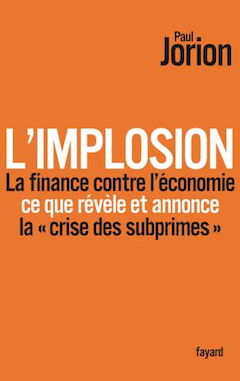
A review of my just published book L’implosion. La finance contre l’économie: ce que révèle et annonce “la crise des subprimes” by Adrien de Tricornot in Le Monde, dated June 16th (translation by Jiro Tanaka - many thanks Jiro!)

Foresight and Despair (”Oracle, ô désespoir !”, pun on a famous line from Corneille’s play “Le Cid” - 1636).

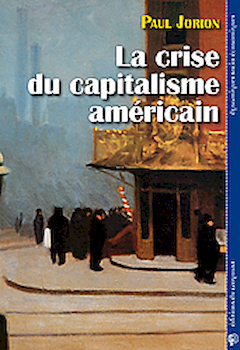
The author of this work, a Frenchman [truly, a Belgian] in America, has analyzed the financial crisis from a unique cultural perspective, and with a multidisciplinary approach. He is an anthropologist, a specialist in artificial intelligence, a research affiliate at UCLA, a former trader, and an economist all of which allowed him to predict as early as 2005 the subprime crisis, which exploded onto the scene in 2007. In a much talked about book entitled “Are we heading for a crisis of American capitalism?”, which appeared in January of 2007 (La Découverte), he foresaw with clarity the causes and consequences of subprime lending. Paul Jorion experienced the crisis from the inside, picking up the pieces as it happened, and when the bubble burst, he lost his position as an officer at one of the mortgage banks caught up in the storm.

In other words, he is well positioned to explain how the American real estate bubble formed, and how average households were incited to borrow in an untenable fashion, betting on the constant appreciation of home value right up until the house of cards collapsed. In 2006, American households “extracted” 1.019 billion dollars in new loans, based on the fragile value of their homes. Mr. Jorion also describes how the use of erroneous financial models and uncontrolled financial innovations (such as securitization) allowed for a massive abdication from responsibility in the organizational structure of the lending industry. He details with great clarity, and in an accessible manner, the instruments and mechanisms that led to this catastrophe.

But his book also shows that this unhappy experiment owes less to chance, and more to the effects of unbridled financial deregulation. Interest groups such as the Mortgage Bankers Association, which represents real estate lenders, defended this deregulation and found an ideologically sympathetic ear in the Bush administration. Some states however, such as North Carolina in 1999, attempted to ward off the danger and protect borrowers by adopting measures against predatory lending. According to Mr. Jorion, Applied at the national level, this legislation would have stopped the bubble from developing, thus preventing the subprime crisis, as well as the credit crunch that followed.

But that didn’t happen, and the measures that were finally taken to assist households in difficulty are likely to be insufficient. According to the author, writing at the end of 2007, roughly a quarter of the two million borrowers concerned would benefit, but a kind of Marshall Plan on a grander scale would still be necessary. For Mr. Jorion, the crisis has only just begun, and it calls for a complete revision of the rules governing finance. It is a warning to be taken seriously.

Comments No Comments »

I’m blessed with a very popular blog in French. One of the questions that came up lately in my dialogue with commentators is that of the reversibility of major ecological disasters induced by human activity and of the feasibility of reversing such disasters with the tools pertaining to our current technology.

This is a serious question, a very serious one, and I intend to use the popularity of my (French) blog to push the issue a far as needs be. I’ve chosen one example – so that we don’t get locked in trivial generalities – that of a possible interruption of the Gulf Stream due to human activity. The consensus is that such an interruption – which I understand already occurred for ten days in 2004 – would make the temperature in Western Europe drop permanently by 5 to 10 degrees Celsius, that is, 10 to 20 degrees Fahrenheit. Is the interruption a possibility – even remote – and should the event occur, what are our realistic chances of reversing it?

According to the response I get to my query, I would consider launching an appropriate form of action around it. I will not be waiting – passively – to get your response only: I will try to reach out to the people I understand are the true experts on this issue and will refer back to you what I’m hearing.

Also – in an attempt to make it a full-fledged effort – I will communicate in each of my two blogs any progress made on the other.

Comments 1 Comment »

The very justification of a Human Complex System’s approach to the operation of human societies, implying a continuous explanatory spectrum from the individual (particle) to the cultural or societal levels (field), is offered by Hegel when he writes in Reason in History (*) that

… human actions in history produce additional results, beyond their immediate purpose and attainment, beyond their immediate knowledge and desire. They gratify their own interests; but something more is thereby accomplished, which is latent in the action though not present in their consciousness and not included in their design.

Adam Smith’s “invisible hand” at work in the markets would then be but one instance of such “cunning of reason.” It is then the more perplexing that the same economists whose analyses most assume the self-regulatory operation of such an “invisible hand” are also those who staunchly commit themselves to a principle of “methodological individualism” implying that there is nothing more to see in the economy than the outcome of the individual economic agents’ rational behavior.

Or is it instead that they are fully aware of the presence of a “something more thereby accomplished” but would rather not know about its precise nature?

(*) Posthumously published in 1837.

Comments No Comments »

One way of looking at the subprime crisis – and by this I mean only the properly real estate–based part of the unfolding drama – is in terms of population dynamics, in terms of three populations of borrowers who first entered the market and then left it in reverse order as the last to come in were also the first to leave.

In order to characterize these populations I’m resorting to a classification that was introduced – although used for a different purpose – by Hyman Minsky, an American Keynesian economist who was born in 1919 and died in 1996. Minsky distinguished [*] three regimes in which an economy can operate in terms of behavior related to debt. In the first regime, borrowers are in a position to reimburse principal and pay interest on a regular basis; this is the safe mode which he called “hedged”. In the second regime, called “speculative,” borrowers are able to pay interest but are unable to reimburse principal. Finally, in the third mode, called “Ponzi”, from “Ponzi scheme,” borrowers are unable to meet either interest or principal payments.

How can either speculators or Ponzi players be part of the scene? Speculators are safe as long as there is no request that they pay back principal, as in a non-amortizing or “balloon” loan: they can “roll” their debt until the day of reckoning. How can Ponzi players stay in the game? This is a bit trickier: they need to sell assets or, alternatively, keep borrowing larger and larger sums in order to service their debt.

In normal circumstances, banks would only lend to “hedgers” being able to pay interest and principal, as these borrowers are the only ones likely to make their business profitable. Residential real estate in the US is subsidized by government: interest payments are tax deductible, and so are property taxes and the proceeds from the house sale, up to a ceiling. Federal Housing Association (FHA) contributions to mortgage insurance constitute as well a subsidy. These subsidies mean that owners can put more money into buying a house than they would otherwise. That additional money finds its way to the housing market and leads to inflation in the price of houses. If the circumstances persist, the market for residential properties sets into bubble mode.

Once the market is in bubble mode an interesting change takes place: “speculative” borrowers are allowed to join in. Why? Because although they have enough money to pay interest but not enough to refund the outstanding balance, in the new circumstances that situation is only provisional as equity is slowly but surely building up through the simple expansion of the bubble. At the height of the bubble in the spring of 2005, housing price was rising at 13.7%. At that speed, equity amounting to 25% of the house value was built in after one year and nine months only.

To give “speculative” borrowers a further little push, lenders reinstated the “Interest Only” mortgage. The Home Owners’ Loan Corporation (HOLC) had refinanced delinquent borrowers in 1933, inventing for the occasion the – from then on “classical” – fixed rate amortizing 30 year loan. The “Interest Only” or “balloon” loan had led borrowers to their demise and it should never happen again thought the legislators of the New Deal. “Not so!”, started to say lenders in the new millennium.

What about Ponzi players? Their time was about to come too! They couldn’t pay full interest and needed therefore to sell assets or further borrow to service it. In a bubble they could do both. They could sell their house at its new inflated price and use the proceeds to pay the interest due. But this was not even necessary as they could simply refinance their loan for a larger amount through a “Cash-out” mortgage loan and use that money. Alternatively, and sparing themselves the hassle of refinancing, they could subscribe to a “HELOC,” a Home Equity Line of Credit, exchanging the equity in their home for cash that could be funneled into paying the interest due.

This being a bit too complicated for some Ponzi players, lenders came up with loan types that were pushing the bother of paying the full interest due into a distant future. There were two approaches. One was the subprime “2/28” ARM (for Adjustable Rate Mortgage) with the initial two years benefiting from a “teaser rate” and the remaining 28 years paying interest at a floating interest rate determined at a set margin above the index: most commonly, the 6 Month LIBOR (London Inter-Bank Offered Rate), the rate at which banks could borrow themselves on the Eurodollar market, Eurodollars being dollars traded outside the US domestic market. As is now well-known, at the time of reckoning, when interest was reset at its “true” rate opportunities for refinancing had all but evaporated, “2/28” borrowers then defaulted in droves, contributing thus to the bubble being punctured.

The second approach used to give the Ponzi players a little push was the “Pay Option ARM,” when the option used was that of “minimum payment” – a formula that 85% of the borrowers of these “affordability loans” – as they were called – enthusiastically adopted. Of course, in the same way as with “2/28” subprime loans, a “reset” time would come when truth would prevail and interest would at long last need to be paid. In the “Pay Option ARM” the part of interest accrued but not actually paid would be added on top of the outstanding balance, i.e. the loan’s principal, creating what is called a “negative equity.” Reset would take place when the outstanding balance would have risen in that manner to 115% of the initial principal value, i.e. when the unpaid part of monthly interest would reach 15% of the loan amount.

As we just saw, Ponzi players can only make their payments – however reduced these have become through subtleties in loan underwriting – if housing prices keep rising: they need indeed a constant restocking of equity to make the interest payments they’ve committed themselves to. Ponzi schemes display however the remarkable property of self-extinguishment. They require indeed to sustain themselves a constant flow of new recruits and these are out of necessity in finite number. Shortage in new recruits is what happened: once the Ponzi players had acquired their own home there was nobody to follow. This marked automatically the Ponzi players’ downfall as it meant that the price of housing stagnated and this they couldn’t bear as what they needed to pay interest was a housing bubble.

But stagnating housing prices are but a fleeting moment as the foreclosed homes of the Ponzi players join the by then pretty crowded residential real estate market, leading the price of homes to fall, resulting in no time in the end of… “speculative” borrowers. Why? Because these could just about pay interest and were counting on the rising equity in their house for reimbursing one day the principal they still owed. When the equity stopped rising it became clear that that hope was unlikely to materialize and “speculative” borrowers got nervous. Nothing ominous had yet happened but the future had stopped looking rosy. When housing price began to drop things turned ominous. When paying interest only no equity in the house is being built apart from that which may be resulting from a current real estate bubble. So as soon as that bubble deflates, “speculative” borrowers find themselves in that position variously called “underwater” or “upside down”: when the outstanding balance on the house has become higher than the money that can be made through selling the house. At that point the “speculative” borrower starts dragging a ball and chain and may feel that the best strategy is that of rushing to the exit and propose the bank a “short sale” where the house is returned with the debt being forfeited – whatever the current value of the house compared to the outstanding balance of the loan – no question being asked.

Homes reclaimed by the banks through short sales are put back on the market, pushing home prices further downwards. As I said, “hedgers” are able to pay interest and principal but this may change with plummeting home prices: if these keep coming down, at some point these borrowers also will get “underwater” or “upside down” and will feel that a “short sale” is the best way for preventing being out of their pocket comes the day of reckoning.

This is the time we’re in as we speak. As proof I will quote Marshall Eckblad of Dow Jones Newswires who wrote yesterday: “Delinquencies among home loans to the nation’s more reliable borrowers, known as “prime” mortgages, are rising quickly, and that could dog banks’ ability to shake further losses this year and next.”

In my next installment I will translate this “population dynamics’” approach of the subprime crisis into a financial one, in terms of the financial instruments involved: all those Asset-Backed Securities (ABS), Collateralized Debt Obligations (CDO), Asset-Backed Commercial Papers (ABCP) and Structured Investment Vehicles (SIV) you’ve heard about.

Watch this space!

[*] Hyman Minsky, The Financial Instability Hypothesis, Working Paper No. 74, May 1992

Comments No Comments »

My new book called “The Implosion, Finance vs. the Economy – What the subprime crisis reveals and foretells” (L’Implosion, La finance contre l’économie - Ce que révèle et annonce la crise des subprimes) will be published on May 4th. The publisher is Arthème Fayard, one of the top French publishers who will realize here a prowess in terms of speed between the reception of a finalized version of a manuscript and the printed book hitting bookstores.

I’m honored that Mr. Claude Durand, head of Fayard, read in no time two versions of my manuscript. When at Editions du Seuil Mr. Durand created a groundbreaking series entitled “Combats”. He was in the same vein the first to publish Alexander Solzhenitsyn in the West.

Comments No Comments »

I was interviewed earlier today by Richard Adhikari, a journalist at TechNewsWorld, about an Artificial Intelligence project. I didn’t know anything about that project except what would be the title of the article: “AI Program Thinks Like a 4-Year-Old”.

There is an excellent summary of what I had told the journalist:

“I’m always suspicious of this kind of thing where they’re dealing with children,” anthropologist and sociologist Paul Jorion told TechNewsWorld. “I always have the feeling that there are some major issues they haven’t been able to solve yet.”

Jorion developed ANELLA, the Associative Network with Emerging Logical and Learning Abilities, whose intelligence was guided by the dynamics of affect, or feeling, back in 1989 for the artificial intelligence unit of British Telecom.

Most of the approaches toward AI “have taken an over-sophisticated view of the problem,” Jorion said. His, on the other hand, was “very simple — I’ve got a universe of words, and you just find a way to connect them that makes sense.”

Now talking about Eddie, the four year old toddler developed at the Rensselaer Polytechnic Institute in New York State by a team lead by Selmer Bringsjord, the article explains that

To test Eddie’s reasoning powers, the group created a demo in Second Life in which Eddie was shown someone placing an object in one location then leaving the virtual room, followed by a second person who moved the object to another location in the room. Eddie was then asked where the first person would look for the object when he got back. Eddie’s response was the first location — incorrect, but typical of a four-year-old child in the real world.

Hmm, what did I tell you!

Comments No Comments »

The subprime crisis is often explained in terms of trust: one day trust between financial counterparties vanished and here was a crisis. Explanations in terms of “market confidence” refer in fact to two distinct phenomena, one being indeed trust and the other one being more plainly straightforward profitability. Let me start with profitability. Subprime loans had been repackaged in their thousands so as to mimic a straightforward obligation, be these Asset-Backed Securities (ABS) or – in a second step – collateralized Debt Obligations (CDO) comprising ABSs. When the risk-based premium embedded within the interest rate charged on a subprime mortgage revealed itself to be insufficient to cover the actual risk of default on such loans, investors stopped buying the products where these had been repackaged. It’s as simple as that and has of course nothing to do in this case with either trust or confidence: investors simply stopped purchasing a product that had ceased to be profitable.

As I’m aiming – as I’ve explained in earlier blogs (*) – at a “complete” explanation of the subprime crisis, I need to model this explicitly – and writing it as part of a computer program is a good manner for ensuring it is complete. Resorting then to some pseudo-code in the style of BASIC I would write something like the following:

If Profitability < 0 then “Don’t buy”

The zero in the equation can be replaced by any figure you wish, depending on your profitability target.

Trust slipped in under two different guises. I remind that a Collateralized Debt Obligation is a composite financial product the elements of which are certificates also called “tranches” of Asset-Backed Securities. Usually a hundred or more ABS tranches are thus repackaged as a CDO. Apart from being backed by subprime loans, ABS can alternatively be backed by credit card debt, auto loans, etc. The composition of a CDO is advertised in its prospectus, so it is possible to know whether or not a particular one comprised ABS backed by subprime loans. Some CDOs are more complex, like a “CDO square”, a CDO composed of CDOs, meaning that it is not unusual for a “CDO square” to be composed of over a thousand underlying ABSs. And this is where trust kicked in back in August 2007: if you couldn’t tell if a financial product contained or not subprime loans, you would simply abstain from buying it.

Confidence is a bit trickier than defining a profitability threshold under which you abstain from buying. You would need something like:

If some part of Product is subprime loans then “Don’t buy”

Typically you would have an array containing the list of components of your CDO and you would loop through it and if subprime is encountered that would be the end of it.

Deal = “Fine”
For each Part in Product
—If Part = “subprime” then
——Deal = “Not Fine”
——Exit For loop
—End If
Next
If Deal = “Fine” then “Buy”

If you were able to loop all the way through without being kicked out and Deal being redefined as “Not Fine” then the deal is fine and you can buy.

But it goes further than that as the condition should also comprise the case where it is impossible to establish whether or not the product contains subprime loans, say that the label for Part is missing making it impossible to find out if it is subprime or not. The line

If Part = “subprime” then

would be rewritten then in the following manner, taking into account the possible occurrence of a missing label, showing as an empty string:

If Part = (“subprime” OR “”) then

emphasizing that the components of the product need to be explicitly known for the deal to go through.

Now an extension of the trust element was also involved: counterparty risk. It might be that you were not buying a single product but engaging in a long term relationship with a counterparty. As with an interest rate swap, say, where payments are made every six months over a period of several years. It is crucial to know that your counterparty will be there in the long haul. Now how many subprime loans has your counterparty in its portfolio that may weaken it financially so that its solvency over the long term might be compromised? Difficult to know. Let’s turn again towards the simple-minded but enlightening process of translating the condition into a line of programming.

If Deal = “Fine” then [passed successfully through the loop above]
—If Number of Cash Flows > 1 then [Product is long term]
——If Counterparty has (No subprime loans) then “Buy”
—End If
End If

The last condition would also be rewritten as a loop

CounterpartyPortfolio = “Fine”
For each Part in Portfolio
—If Part = (“subprime” OR “”) then
——Count = Count + 1
——If Count > 100 then [100 or any other threshold]
———CounterpartyPortfolio = “Not Fine”
———Exit For loop
——End If
—End If
Next
If CounterpartyPortfolio = “Fine” then “Buy”

Bringing this all together, the whole “trust” or “confidence” issue would actually amount to the following test:

Deal = “Fine”
For each Part in Product
—If Part = (“subprime” OR “”) then
——Deal = “Not Fine”
——Exit For loop
—End If
Next
If Deal = “Fine” then
—If Number of Cash Flows > 1 then
——For each Part in CounterpartyPortfolio
———If Part = (“subprime” OR “”) then
————Count = Count + 1
————If Count > 100 then
—————Deal = “Not Fine”
—————Exit For loop
————End If
———End If
——Next
—End If
End If
If Deal = “Fine” then “Buy”

As can be seen from my pseudo-code, what the “trust” or “confidence” issue means in fact in the subprime crisis is that the conditions for purchasing a financial product become increasingly restrictive. The number of hurdles grows and the information necessary for a transaction to be allowed is growing in step: first about the product, containing subprime loans or not, about the seller next: “containing” (in portfolio) subprime loans or not. The crucial part is the “If Part = (“subprime” OR “”)” test: a large number of transactions would be prohibited because of the explicit presence of subprime loans but many more because of the missing information represented by the empty string “”: in case of doubt please abstain!

(*) The subprime crisis: a human complex system phenomenon, Agents using financial models and the “human cognitive cocktail”, Pricing models: why the good ones are useless and the true ones, priceless

Comments No Comments »