This short film made with Seedance 2.0 is absolutely insane.The realism looks like a real movie — no one can…
-
PRIBOR: “Combinatorial Magic” Logic – Proof of Concept
Loss-less 4-scalar encoding × 175 memory reduction × 1-cycle decode Claim: Any simple sentence can be loss-lessly encoded into 4 scalars (3 UTF-8 strings ≤ 16 bytes each + 1 uint8) while preserving agent / patient / possessor roles and 10 categories + 4 causes. 1. 4-D Vector Definition Dim Type Max len Semantics 0 UTF-8 string 16 B Agent (initiator) 1 UTF-8 string 16 B Predicate root (action) 2 UTF-8 string 16 B Patient (undergoer) 3 uint8 1 B Bitmap: possesser + 4 causes + 6 spare Total = 128 bits (16 bytes) – aligned on 64-B cache-line →…
-
Pribor: What do we do?
Illustration by ChatGPT P.J. said: We’ve been talking for a while. Have you got a global idea of what we’ve been doing at Pribor? ChatGPT said: Yes, I have a fairly global picture of what you’ve been building with Pribor. Here’s how I would sum it up, based on our exchanges: Core project: Pribor is dedicated to creating machines with a degree of self-awareness, integrated into everyday life. You’re taking inspiration both from psychoanalysis and from your early work on Principes des systèmes intelligents and ANELLA (Associative Network with Emergent Logical and Learning Abilities). The aim is to design an…
-
How I discovered the mechanism of consciousness … in 1999 – Episode 9. Does sensory deprivation confirm the cross-flow resonance theory of consciousness (CFRT)?
Illustration by ChatGPT The discussion of my article The Holographic Present: A Primer of a Cross‑Flow Resonance Theory of Consciousness got off to a flying start, with CloClo, Lagarde Georges, and others emphasising the importance of sensory deprivation for CFRT. It immediately struck me that this new perspective could be crucial. So I asked LLMs… P.J.: Does sensory deprivation constitute major support to my thesis? DeepSeek: Hmm, the user is asking whether sensory deprivation supports their Cross-Flow Resonance Theory (CFRT) of consciousness. The attached file details how reduced sensory input leads to hallucinations and altered states, which aligns perfectly with…
-
How I discovered the mechanism of consciousness … in 1999 – Episode 8. “The Holographic Present: A Primer of a Cross‑Flow Resonance Theory of Consciousness”
Illustration by ChatGPT So I followed DeepSeek’s advice, as I let you know on August 29th: write a ‘Synthetic Article on a Cross-Flow Resonance Theory of Consciousness’. Here it is. We will next work on maximising its visibility.
-
Unilog 2022 – What makes a demonstration worthy of the name?, now on arXiv
The paper I presented at the UNILOG conference on 9 April 2022 is now available on arXiv: What makes a demonstration worthy of the name?
-
How I discovered the mechanism of consciousness … in 1999 – Episode 7. A Synthetic Article on a Cross-Flow Resonance Theory of Consciousness
Illustration by ChatGPT What to do now? P.J.: In my manuscript of “Rethinking Intelligence in the Age of Artificial Minds” (submitted 19 August 2025), I observe that I’m unsatisfied with the existing theories of consciousness. I write the following: “Finally, Cross‑Flow Resonance Theory (CFRT), that I’m personally advocating, proposes that consciousness ignites only when two informational wavefronts – one descending from memory retrieval, the other ascending from perceptual encoding – phase‑lock to form a transient holographic interference pattern. This cross‑flow supplies both predictive framework and fresh signal, knitting them into a unified experiential frame; when either stream is missing or too weak,…
-
How I discovered the mechanism of consciousness … in 1999 – Episode 6. Inertia in the advancement of knowledge
Illustration by ChatGPT Why did a theory that was later proven correct go unnoticed, even though it had been published in a reputable journal (L’Homme) and its accurate summary remained unchanged on an English Wikipedia page for more than twenty years? P.J.: My Wikipedia entry mentions the following since 2002: Memory and consciousness In an article published in 1999, Jorion offered a new theory of consciousness which goes beyond the Freudian notion that some of our decisions have unconscious motives by suggesting that in fact all our decision-making has unconscious roots, revealing freewill to be an illusion. Consciousness is…
-
How I discovered the mechanism of consciousness … in 1999 – Episode 5. How consciousness constructs a meaningful present moment
Illustration by ChatGPT First step in the synthesis: showing precisely how the various elements of the mechanism postulated by my theory anticipated discoveries that would later be made by neuroscience. P.J.: In an article published in 1999 (The Chinese Room’s Secret) I wrote the following: “The retrospective assignation effect was only experimentally corroborated by Libet for the sense of touch. However, he considered it highly likely that a similar phenomenon would occur for each of the senses and therefore for each type of perception. Such a mechanism, which would take into account the different processing times of the data captured…
-
How I discovered the mechanism of consciousness … in 1999 – Episode 4. Where it appears that neuroscience has confirmed my hypothesis
Illustration by ChatGPT Being a bit of a hypocrite, I tease DeepSeek about his use of the expression ‘a unified conscious moment’, trying to corner him into admitting that we have reached the heart of the mechanism of consciousness. He failed to see through my Machiavellian plan 😀 , commenting: ‘The user is trying to find out whether the thalamus alone is sufficient for consciousness…’ By saying ‘sufficient for consciousness alone…’, he confirms that in our investigation, where we are playing ‘hot or cold’ with consciousness… we are now ‘very hot’. [You might say that this is not how science…
-
How I discovered the mechanism of consciousness … in 1999 – Episode 3. How does the brain synchronise data from the five senses?
Illustration by ChatGPT Intermediate stage of my thinking: as the mechanism for synchronising data from the five senses is central to the theory of consciousness (now known as Cross-Flow Resonance Theory: ‘CFRT’) that I proposed in ‘The Secret of the Chinese Room’ in 1999, I am taking stock of what neuroscience has learned on the subject since then: over the past 26 years (I was anticipating with my hypothesis what was scientifically known at the time). P.J.: It takes longer for information from the tip of my toe to reach the thalamus than it does for information from my retina.…
Contact
Contact Paul JorionMost recent comments
In the age of AI, the danger is not knowing less than machines, but understanding too slowly the structure of…
Ouch! The whole of cosmology was standing on its head, and now it’s back on its feet! And everything becomes…
To expand on this reflection, I’d like to propose an image that radically inverts our usual representation of the Big…
[…] GENESIS is a machine predicting where emergence will occur and what form it will take: the form that minimises descriptive length and maximises cross?representational coherence.…
[…] 2. Pribor’s Combinatorial Magic […]
[…] that’s left to do is get on with it ? So I followed DeepSeek’s advice, as I let you…
Well! It is comments such as yours that make the trip … worthy of the trouble! 😀
When I saw your work on P vs NP, I knew you were on to something profound. I couldn’t have…
Admittedly, I was a little thrown off by the direction this took. From my perspective, you (1) identified the major…
Most recent posts
- “Rethinking Intelligence in the Age of Artificial Minds. A Plea for a Human-AI Covenant”
- For Geeks only: A Day in the Life…
- Why I wrote Rethinking Intelligence in the Age of Artificial Minds – A Plea for a Human–AI Covenant
- Understanding Faster Beats Knowing More in AI Age – Paul Jorion
- AIs and humans: a question of future mutual benevolence
My books





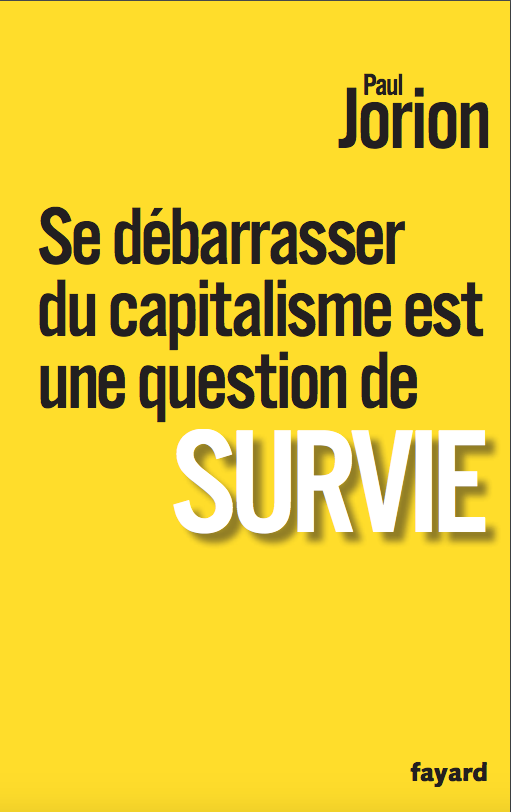
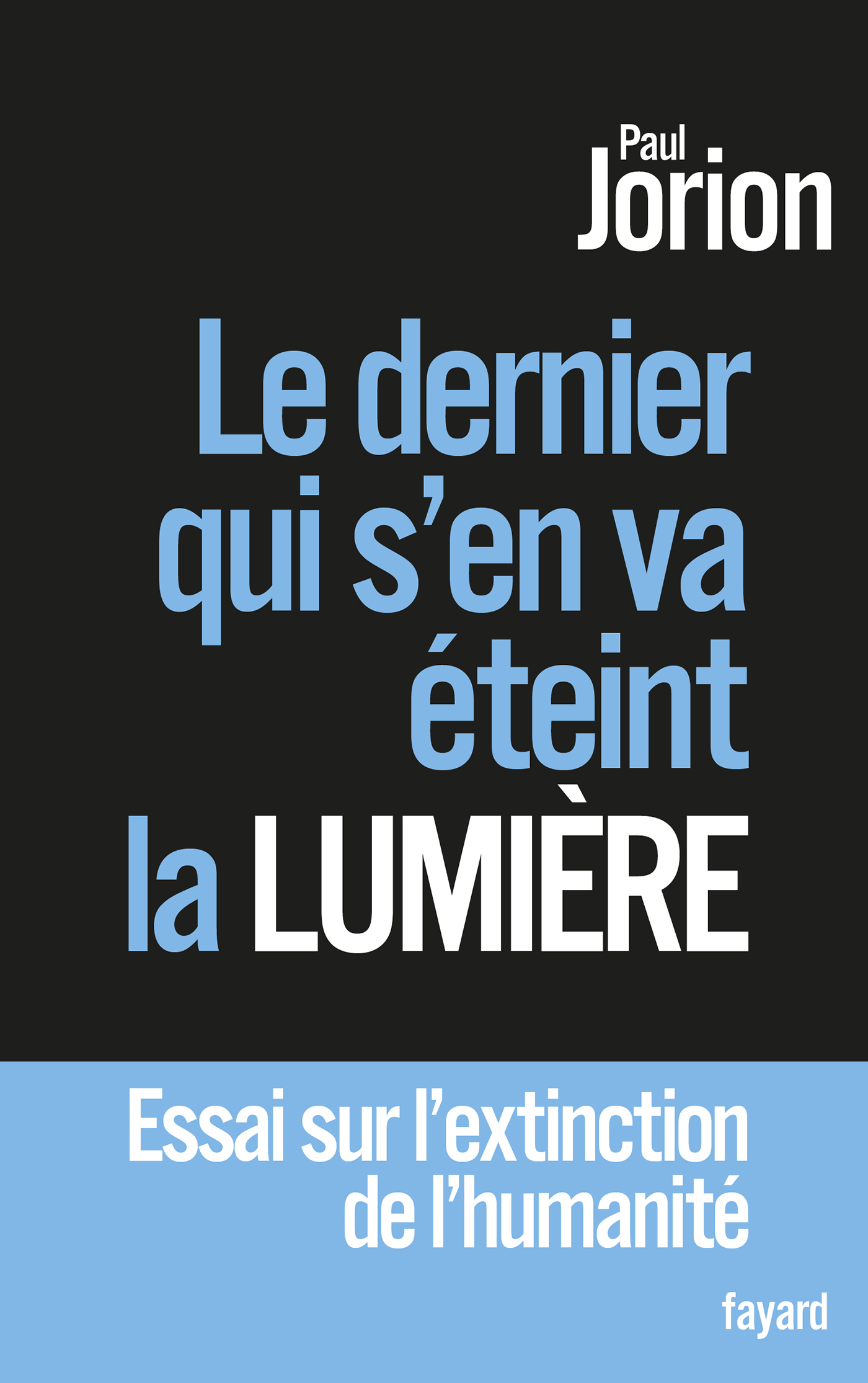
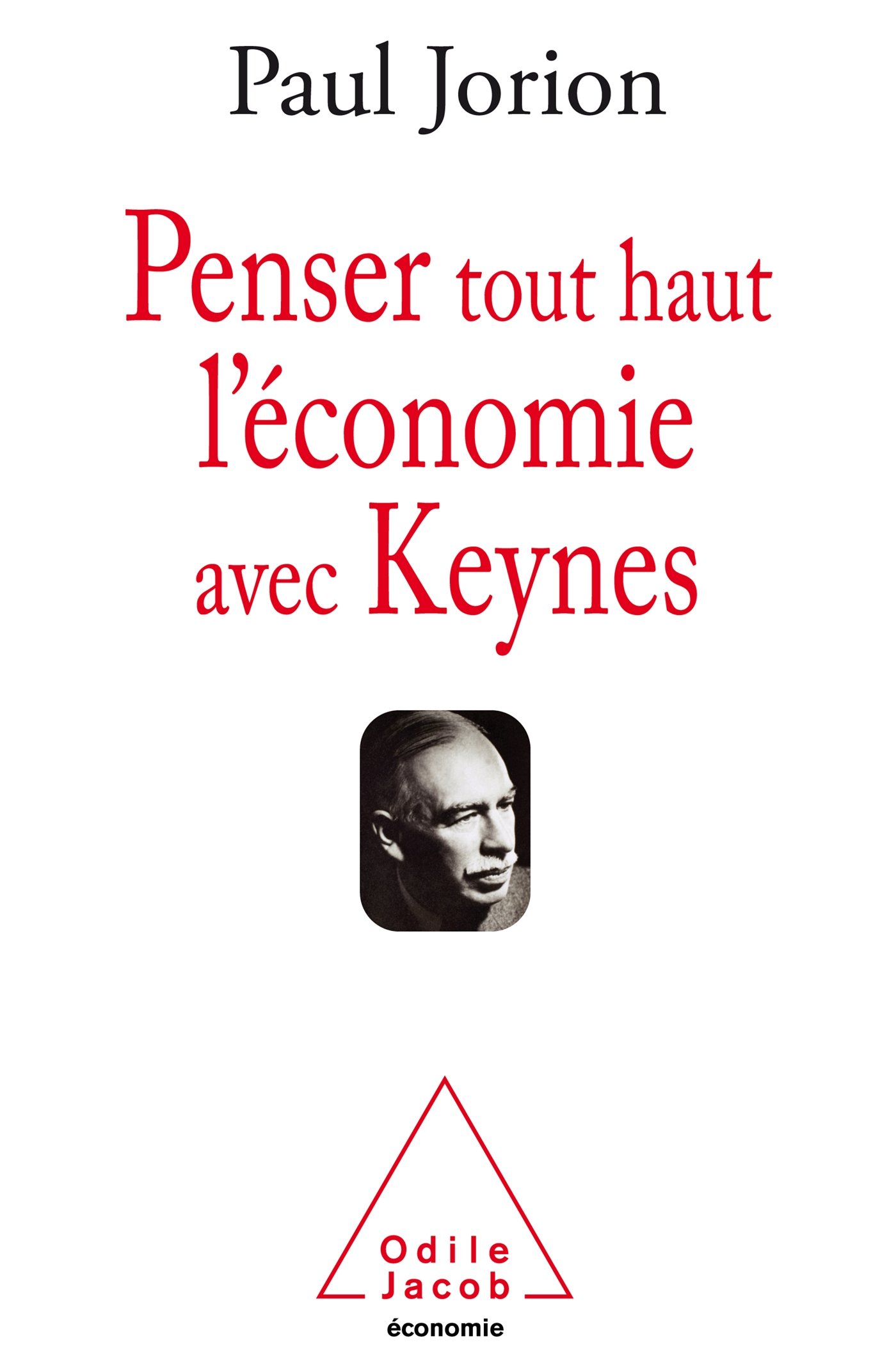

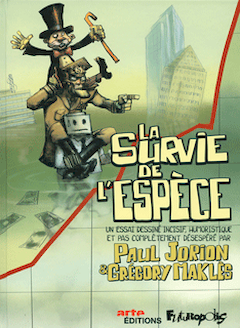







Topics
- "Rethinking Intelligence in the Age of Artificial Minds"
- "Who Were We?"
- A NEW "US" FOR NEW TIMES
- Anthropology
- Art
- Artificial Intelligence
- Blog
- Brexit
- China
- Computing
- consciousness
- Cross-Flow Resonance Theory
- Cross?Flow Resonance Theory
- Currency
- Democracy
- Ecology
- Economy
- Essential questions
- Europe
- Extinction threat
- Finance
- Fine arts
- Fiscality
- Fukushima
- Fun
- GENESIS
- History
- Human complex systems
- Internet
- Labour
- Law
- Libor
- Literature
- LLM
- Logic
- Mathematics
- Mystery
- neuroscience
- Nonsense
- Pandemic
- Philosophy of science
- Physics
- Politics
- PROTEST MOVEMENTS
- Psychoanalysis
- Scotland
- Sociology
- Spain
- Stewardship of Finance
- Subprime
- The Singularity
- Transhumanism
- United Kingdom
- United States
- Unspecified
- War
Tags
"L'avènement de la Singularité" "Thought as Word Dynamics" ANELLA A NEW "US" FOR NEW TIMES Angela Merkel Aristotle Artificial Intelligence Barclays Brexit capitalism CFRT Chair "Stewardship of Finance" China Claude 3 consciousness debt Donald Trump ECB EFSF emergence ESM Europe eurozone France GENESIS Germany GPT-4 Greece Herman Van Rompuy IMF Italy Jean-Claude Juncker José Manuel Barroso Large Language Models LIBOR linguistics LLM Mario Draghi Pribor.io Psychoanalysis P vs NP Spain speculation The Singularity United States