This short film made with Seedance 2.0 is absolutely insane.The realism looks like a real movie — no one can…
-
Gold fish
I just had an odd vision. It happens on Judgment Day and I am shocked at the questions being asked from me: “How many gold fish in your care died of neglect? How many babies did you leave crying in the dark? Who were they? How many daisies did you trample?” I say “I feel very unprepared for such questions, I had concentrated on – you know – the broader issues, like honesty or being courageous…” And the official presses on “How many daisies? Come on! give me a figure! Two thousands? Five thousands?”
-
The network comprises a subset of the words (the “content words”) of a particular natural language
Thought as word dynamics. II. Architecture (4) In Indo-European languages there are two types of words. Every speaker has a very strong intuitive feeling of this. We have no difficulty when defining the meaning – or offering a definition – of words of the first type: “a rose is a flower that has many petals, often pink, a strong and very pleasant fragrance, a thorny stem,” etc.; “a tire is a rubber envelope to a wheel, inflated with air,” etc. With the second type, we’re in real trouble: for instance with the word ‘nonetheless,’ “it is used when one wishes…
-
How wars get started
When in 1975 I became a student at Cambridge University my parents visited me there. It was actually their first stay in England. My mother was enchanted with the country. I wanted to know why and she explained that houses were “normal”, people behaved “normally”, everything in England was so essentially “normal”. I pressed her gently about the source of such “normalcy”: “Well”, she said, “houses look like Dutch houses; people respond to you like they would in Holland; you know…” Adriana’s father is Romanian and he shares with my mother the same sound sense of normalcy based on the…
-
A talking subject experiences the dynamics of speech generation as emotional or “affective”
Thought as word dynamics. I. General principles. (3) A thoroughly “physical” account of the objective dynamics of speech performance will be provided later. In the meantime I’m indicating here that as far as talking subjects are concerned, their subjective experience of the dynamics of speech performance is – from the initiation of a speech act to its conclusion – one of an emotional or “affective” nature. A view commonly held is that emotions hinder the expression of rational thinking. Beyond a certain threshold, emotions may indeed lead to disarray and impair speech performance. In normal circumstances however, the “expression of…
-
Logic and semantics in Woody Allen’s “The UFO Menace”
We read in Woody Allen’s “The UFO Menace” (*) that: “Professor Leon Speciman postulates a civilization in outer space that is more advanced than ours by approximately fifteen minutes. This, he feels gives them a great advantage over us, since they needn’t rush to get to appointments.” With due respect to the Nobel Prize laureate I would like to inform him that, had he been familiar with the work of the Mohist logicians (4th and 3rd Centuries B.C.) and with the Mo-tzu in particular, he wouldn’t have come up with such flawed reasoning. Indeed, that a civilization in outer space…
-
The network in question is stored in the human brain
Thought as word dynamics. I. General principles. (2) It is undeniable that speech acts are produced from within a talking subject, as they are uttered through the mouth. This however does not necessarily imply that the network mentioned in Speech acts are generated as the outcome of a dynamics operating on a network, along with its data, is stored within the talking subject. It can however be reasonably inferred that such is indeed the case, essentially for lack of a viable alternative hypothesis. Suppose for a moment that the network were located elsewhere than within talking subjects, meaning that the…
-
Why, like cats, we have nine lives
Back in 2000 I devoted a paper to some implications of the “many worlds” interpretation of quantum mechanics proposed in 1957 by Hugh Everett III in his Princeton thesis entitled “‘Relative State’ Formulation of Quantum Mechanics”. At the time I had no notion of anybody else in philosophy interested in these issues. The article was published in French in one of the publications of the Collège International de Philosophie in Paris (“Pourquoi nous avons neuf vies comme les chats”, in Papiers du Collège International de Philosophie, Nº 51, Reconstitutions, 2000: 69-80). Recently I discovered a series of papers by David…
-
Speech acts are generated as the outcome of a dynamics operating on a network
Thought as word dynamics. I. General principles (1) The general hypothesis is that “speech acts are generated as the outcome of a dynamics operating on a network”; it is specific as far as it states that the data, the “words,” summoned in the generation of speech acts are structured as a network. It is also informative when it distinguishes to the mechanism, two parts: an architecture, being the network itself and a “dynamics” – so far unqualified – operating on it. To a large extent the hypothesis states the obvious as speech performance unfolds in time and is therefore out…
-
Stock prices and the shape of randomness
I remember an illustration in an article by Heinz von Foerster in the 1960s. In the first picture, a set of tiny cubes were represented, piled up in a random manner. The reader was told that these were steel cubes magnetized on one of their sides. The second picture showed what had happened after the cubes were put in a container that was then thoroughly shaken for a while: the cubes had aligned to create a complex structure with perpendicular ridges shooting out and closing up. There was still some randomness in the arrangement but it was so delicate and…
-
Thought as Word Dynamics
On two occasions already on my French blog, I’ve written an article in a serialized format, posting each part whenever it was ready then creating a link to a copy of the whole text when it had reached a final form. In both instances has the process taken about two months (Les tâches et les responsabilités qui sont aujourd’hui les nôtres ; Ce qu’il est raisonnable de comprendre et partant d’expliquer). I will proceed in the same way with Thought as Word Dynamics. I envision that the process will take longer as the text is structured at inception as having…
Contact
Contact Paul JorionMost recent comments
In the age of AI, the danger is not knowing less than machines, but understanding too slowly the structure of…
Ouch! The whole of cosmology was standing on its head, and now it’s back on its feet! And everything becomes…
To expand on this reflection, I’d like to propose an image that radically inverts our usual representation of the Big…
[…] GENESIS is a machine predicting where emergence will occur and what form it will take: the form that minimises descriptive length and maximises cross?representational coherence.…
[…] 2. Pribor’s Combinatorial Magic […]
[…] that’s left to do is get on with it ? So I followed DeepSeek’s advice, as I let you…
Well! It is comments such as yours that make the trip … worthy of the trouble! 😀
When I saw your work on P vs NP, I knew you were on to something profound. I couldn’t have…
Admittedly, I was a little thrown off by the direction this took. From my perspective, you (1) identified the major…
Most recent posts
- “Rethinking Intelligence in the Age of Artificial Minds. A Plea for a Human-AI Covenant”
- For Geeks only: A Day in the Life…
- Why I wrote Rethinking Intelligence in the Age of Artificial Minds – A Plea for a Human–AI Covenant
- Understanding Faster Beats Knowing More in AI Age – Paul Jorion
- AIs and humans: a question of future mutual benevolence
My books

















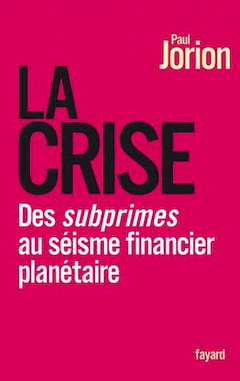
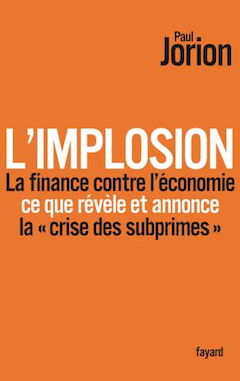

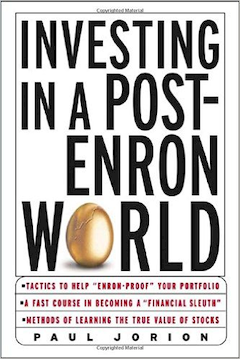



Topics
- "Rethinking Intelligence in the Age of Artificial Minds"
- "Who Were We?"
- A NEW "US" FOR NEW TIMES
- Anthropology
- Art
- Artificial Intelligence
- Blog
- Brexit
- China
- Computing
- consciousness
- Cross-Flow Resonance Theory
- Cross?Flow Resonance Theory
- Currency
- Democracy
- Ecology
- Economy
- Essential questions
- Europe
- Extinction threat
- Finance
- Fine arts
- Fiscality
- Fukushima
- Fun
- GENESIS
- History
- Human complex systems
- Internet
- Labour
- Law
- Libor
- Literature
- LLM
- Logic
- Mathematics
- Mystery
- neuroscience
- Nonsense
- Pandemic
- Philosophy of science
- Physics
- Politics
- PROTEST MOVEMENTS
- Psychoanalysis
- Scotland
- Sociology
- Spain
- Stewardship of Finance
- Subprime
- The Singularity
- Transhumanism
- United Kingdom
- United States
- Unspecified
- War
Tags
"L'avènement de la Singularité" "Thought as Word Dynamics" ANELLA A NEW "US" FOR NEW TIMES Angela Merkel Aristotle Artificial Intelligence Barclays Brexit capitalism CFRT Chair "Stewardship of Finance" China Claude 3 consciousness debt Donald Trump ECB EFSF emergence ESM Europe eurozone France GENESIS Germany GPT-4 Greece Herman Van Rompuy IMF Italy Jean-Claude Juncker José Manuel Barroso Large Language Models LIBOR linguistics LLM Mario Draghi Pribor.io Psychoanalysis P vs NP Spain speculation The Singularity United States