


@Tout me hérisse Quelles chances y a-t-il qu’elle donne naisance d’ici 25 ans à de nombreux fedayin ?
*Le seul Blog optimiste du monde occidental*
-
Vidéo – Paul & Stéphanie : Le savoir qui nous tombe du ciel
Lire la suite : Vidéo – Paul & Stéphanie : Le savoir qui nous tombe du cielIntuitions ? ou guidances ? en psychothérapie.
-
Le scandale (?) des firmes rachetant leurs propres actions
Lire la suite : Le scandale (?) des firmes rachetant leurs propres actions
Illustration par DALL·E de la Bourse selon Salvador Dali (+PJ)
Si vous avez lu au moins quelques-uns des onze livres que j’ai consacrés à des questions financières, vous aurez retenu que […]
-
Savez-vous ce qu’est un paradiddle ?
Lire la suite : Savez-vous ce qu’est un paradiddle ?Paradiddle, encore appelé moulin : utilisation rudimentaire du tambour ou de la batterie.
… néanmoins efficace ! De grands moments, souvenez-vous !
Buddy Holly
-
Vidéo – Trump sur la sellette !
Lire la suite : Vidéo – Trump sur la sellette !Trump devant un tribunal new-yorkais : rappel des faits et sélection des jurés
-
The Guardian – Oxford ferme un institut dirigé par un philosophe soutenu par Elon Musk, par Nick Robins-Early, le 20 avril 2024
Lire la suite : The Guardian – Oxford ferme un institut dirigé par un philosophe soutenu par Elon Musk, par Nick Robins-Early, le 20 avril 2024
Illustration par DALL·E (+PJ)
La fermeture d’un institut à l’Université d’Oxford pourrait passer pour un événement d’un intérêt purement anecdotique. Or ce n’est pas le cas et si vous […]
-
Paul Jorion, psychanalyste – Mise à jour
Lire la suite : Paul Jorion, psychanalyste – Mise à jourJ’ai la possibilité de prendre 2 nouvelles personnes en analyse (présentiel ou distanciel).
Pour la manière dont ça se passe, le contexte, les conditions, voyez ici.
Pour me contacter, écrivez-moi ici.
-
Sciences et Avenir – Une créature surdouée, par Andreina De Bei
Lire la suite : Sciences et Avenir – Une créature surdouée, par Andreina De BeiSciences et Avenir – Une créature surdouée, par Andreina De Bei, Mai 2024, p. 92

-
IA – Arthur Mensch de la firme Mistral ne croit pas en un Dieu qui n’existe pas encore
Lire la suite : IA – Arthur Mensch de la firme Mistral ne croit pas en un Dieu qui n’existe pas encore
Illustration par DALL·E de la déclaration de M. Mensch au New York Times
Vous avez peut-être vu passer cela : Le cofondateur de Mistral AI ne croit pas […]
-
rtbf – L’avènement de la Singularité, aujourd’hui mercredi 17 avril de 10h30 à 11h15
Lire la suite : rtbf – L’avènement de la Singularité, aujourd’hui mercredi 17 avril de 10h30 à 11h15Véronique Thyberghien m’a reçu dans son émission Tendances Première à la RTBF de 10h30 à 11h15.
Le podcast est désormais en ligne, c’est ici.
-
Purge chez OpenAI : Elon Musk, Nouvel Ordre Mondial altruiste, etc.
Lire la suite : Purge chez OpenAI : Elon Musk, Nouvel Ordre Mondial altruiste, etc.
Portrait de Sam Altman par Stable Diffusion (contenant un casse-tête pour dactylophiles)
Vous vous souvenez sans doute de la révolution de palais ratée chez OpenAI le 17 novembre de l’année dernière […]
-
Trump : « Selon que vous serez puissant ou misérable, les jugements de cour vous rendront blanc ou noir » (Jean de La Fontaine)
Lire la suite : Trump : « Selon que vous serez puissant ou misérable, les jugements de cour vous rendront blanc ou noir » (Jean de La Fontaine)
Portrait de Donald Trump par Stable Diffusion
La fortune de Trump est essentiellement virtuelle mais sa nature virtuelle ne lui interdit pas d’être mise en gage et de dégager du liquide […]
Contact
Bourse
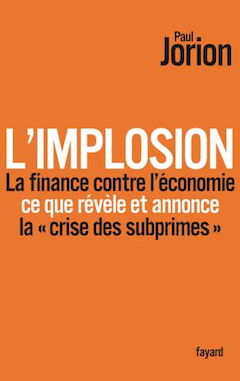
Les livres de Paul Jorion







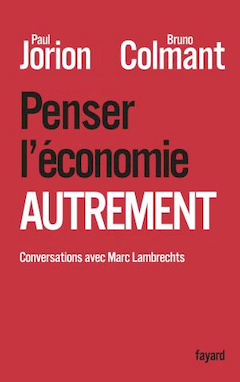


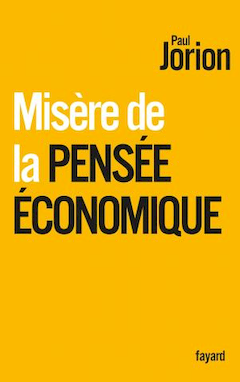

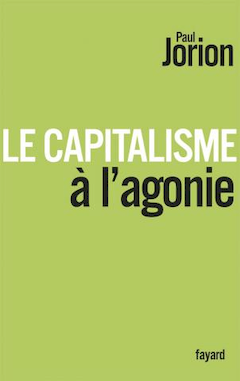



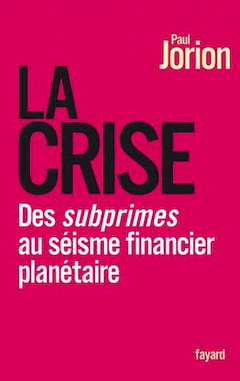





Articles récents
- Vidéo – Paul & Stéphanie : Le savoir qui nous tombe du ciel
- Le scandale (?) des firmes rachetant leurs propres actions
- Savez-vous ce qu’est un paradiddle ?
- Vidéo – Trump sur la sellette !
- Les Grands Modèles de Langage sont-ils conscients ?
Commentaires récents
https://www.youtube.com/watch?v=3qjX0uhjxIs&pp=ygUJw6AgZ2F1Y2hl
Chabian vous avez raison, je vais arrêter de caricaturer notre ami l’arsène, le Caliméro aux 39 followers! Drôle de police…
Mais, bonne nouvelle dans ce monde de brutes : Fitch et Moody’s laissent la note de la France inchangée… 🤑 https://www.tdg.ch/dette-fitch-et-moodys-laissent-inchangees-la-note-souveraine-de-la-france-766745382534
Il y a mieux pour débuter sa vie sur notre pauvre terre, telle cette petite fille extraite du ventre de…
Bonsoir tout le monde ! Il me semblait bien avoir entendu un bruit … https://youtu.be/ZmDHhdIOZ0E
Timiota et Pascal ont bien cerné la problématique. Il s’agit en effet d’un problème de joints périphériques de dilatation et…
C’est un classique de la pose de carrelage par un professionnel débutant. Faute de ménager une petite épaisseur de joint…
« ce son des vibrations » Faute d’orthographe ou lapsus ? ;-)))
Que sommes-nous ? Principalement du vide, si l’on se place à l’échelle atomique. L »atome lui-même étant composé majoritairement de vide…
Catégories
Archives
Tags
Allemagne Aristote bancor BCE Bourse Brexit capitalisme centrale nucléaire de Fukushima ChatGPT Chine Confinement Coronavirus Covid-19 dette dette publique Donald Trump Emmanuel Macron Espagne Etats-Unis Europe extinction du genre humain FMI France Grèce intelligence artificielle interdiction des paris sur les fluctuations de prix Italie Japon John Maynard Keynes Karl Marx pandémie Portugal psychanalyse robotisation Royaume-Uni Russie réchauffement climatique Réfugiés spéculation Thomas Piketty Ukraine ultralibéralisme Vladimir Poutine zone euro « Le dernier qui s'en va éteint la lumière »
Blogroll
- Blog de Pierre Sarton du Jonchay
4 - Contacter Paul Jorion
Contacter Paul Jorion
9 - Le Forum du Blog de Paul Jorion
Le Forum du Blog de Paul Jorion
10